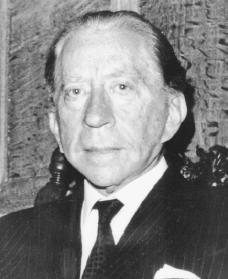
Do you recognize this man?
 No? Don't even. To whit: Clarence Jackson, Jr. preferred to be called "Jazz" by his teammates. Out of respect for this, we speak of
Jazz Jackson #43, a running back for the Jets from 1974-76. In the 1975 Jets Yearbook, he is crowned with dull distinction: "
(Jazz) is a very muscular and durable runner despite his size" (5'8") and the "
shortest Jet ever." This was before the arrival Bruce Harper, so not even that last comment holds true anymore. The only memory I have of him is an exhibition game against St. Louis in 1976 where he fumbled. He recovered it, though. The announcer on Channel 5 did that thing that all announcers do, putting words in the mouths of the players on TV. "Look at him," the announcer said. "
Where the heck's that ball!? Get back here!"
Where indeed. Jackson's hands were in the right place at the right time in the second game of the 1974 season, at Soldier Field. "Clarence Jackson" recovered a fumble committed by, of all people, John Riggins and then ran it for a touchdown. Here it is, starting at the :34 mark. Don't neglect a chance to see Pat Summerall and Tom Brookshier in their nifty red blazers at the start of the video. They look like Avis ticket clerks.
The Jets won the game 23-21, their first of the season. They wouldn't win another game for six weeks. Then, having taken themselves out of the playoffs at 1-7, they would go on to win every game left in the season. This means that Jazz Jackson's accidental touchdown provided the only real link to winning that the Jets would have that whole season until they traveled to the
Yale Bowl to play the Giants. It was a strange one as Jets seasons go, with a resurgence where the Jets usually flagged. They should offer college seminars on the subject of New York Jets' December downward spirals.
Which one was your favorite? Why? Explain.
 |
| 1974 New York Jets |
Then in the middle of that season, Jackson started against Houston at Shea and scored the only other touchdown of his career, a 20-yard reception of a Namath pass. What I wouldn't give to hear that Beaver Falls accent say, "
Nice one...
Jazz," when he came to the sideline. We should all be so lucky. If Dad went to the Oilers game, he's not remembering it. I think the seed of his abandoning his beloved season tickets in 1977 was probably planted in that 1-7 nosedive in '74. He probably stayed home for most of the home games that season. Jazz Jackson's arrival didn't cause the Jets to start their franchise slide; he was just in the wrong place at the wrong time, a choral performer during Namath's vanishing years.

Signed as an undrafted free agent in 1995,
Vance Joseph #43 (
left) played for a franchise about to hit a low much deeper than the one that came with Jazz Jackson's career. Ritchie Kotite's squad went 3-13 in '95, and that was the better of the two Kotite seasons. The Kotite years are the Years Of Shame. Every franchise has them. The Indianapolis Colts
had them. The New England Patriots
had them. Years of absolute incompetence at every conceivable level. For the New Orleans Saints that was the first twenty seasons. Vance Joseph could not have been comforted by this; none of us were. But looking at his wikipedia, Vance Joseph had long career
after the pros coaching college football at his alma mater of Colorado, then at Wyoming and Bowling Green; this has then led him to his current position as secondary coach with former Jet Johnnie Lynn for the 49ers. He was an offensive player in college who would eventually end up coaching the defensive position to which he had to become accustomed as a undrafted pro. No scandal, no funny stories, no ambiguous connections between life and work, no shame. Just work.

There's no shame in being
Roger Vick either, although he makes us feel shame sometimes because he was a draft bust. If the success of people who don't even know we exist makes us happier than our own achievements should, then their disappointments make us feel the same secret regrets that accompany our own persistent mistakes. Suffice it to say that the other undergraduate course that should be made available is the psychological study that bad draft choices have had on our club up until about 2000. Mel Kiper once said that "the Jets clearly have no idea what the draft is all about," and he was right (though I don't think anyone could say that about our last six or seven years in the draft, minus Vernon Gholsten). For a long time what the Jets didn't know about the draft you couldn't squeeze into the Meadowlands.
Drafted #1 by the Jets in 1987, Roger Vick #43 was the running back who was supposed to accompany or even replace Freeman McNeil. The fact that he was drafted at the start of a strike season would set anyone off course. He began his career in the pros at the same time I began college, and if the faculty had gone on strike in my freshman year, it would have thrown me off, too. His best season was 1988, with 660 total yards. Beyond that, his sun sets as fast as it does on a playoff Sunday. The famous video on
Jets draft blunders includes Roger Vick, of course. In lieu of him, the Jets could have drafted Harris Barton, Bruce Armstrong, Jim Harbaugh or Cris Carter, all of whom were still available. It hurts a little.
But it's a good kind of pain, edifying to the soul, reminding us of life's inherent limits. Confronted with the draft, Jets fans are like the speaker in Claude McKay's "America" who "loves this cultured hell that tests my youth." Why do so few Giants fans go to the draft the way Jets fans do? It's simple. Jets fans are proud of and enriched by the hell that is the draft day blunder. To have survived it over and over is to be a true fan. The draft is the ceremony that embodies our most essential experience with mortality and powerlessness. The draft is the acreage in the soul where accident and design meet, a place where chaos reigns as management makes absolutely the wrong decision. You despair, and because of that, you are more equipped to handle the various bits of outrageously bad fortune that this ridiculous world throws at you. This why our fans are the Draft Day's mascots. Assembled on the upper deck of Radio City, they are like a profane Greek chorus, echoing all of our mortal anxieties in their familiar refrains:
Don't blow this. Don't. You'll probably screw this up.
Like you did with Lam Jones.
And Ken O'Brien.
And Blair Thomas.
And Roger Vick.
Please, not again.
You're going to blow it.
I just know it.