Selasa, 18 Mei 2010

NY Jets #44 - John Riggins

There are rules for being a fan, but they are mostly held and maintained by people who are loyal to one team and can't fathom anyone changing sides. Contrary to what some people might tell you, it's perfectly acceptable for a fan to love two teams, even three, at once, though he or she will probably lack the sense of kinship that's intrinsic to the entire experience. I think your likelihood to play the field in sports is directly related to the love of the sport in question. I follow more than one baseball team but only one football team. I'm on a hockey team's bandwagon right now, but that will not last through the playoffs. I don't even recognize basketball as the game that used to be played by Bird and Magic. In football, I wish Andy Reid's grim-faced soap opera in Philadelphia well because I've lived here for eighteen years. But the only football team I could possibly have followed outside of my one and only were the Washington Redskins from 1976 to 1984, and for only one reason: John Riggins.

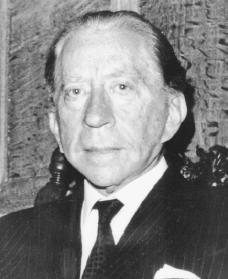
Perm, handlebar
In a fan's life, one becomes occasionally attached to one player for whatever reason, and he follows the player's career regardless of where the player plays. Sometimes this attachment arises from some personal sense of belonging stirred in you. For some peculiar reason, you can feel it. The player belongs to you. You aren't about to camp out in front of his home or write letters to his children, but he becomes the embodiment of everything you need to believe about your team. Yet if he is traded or departs of his own volition, he sticks to your heart such that you can live, spiritually, in two places at once. This is what happened when John Riggins #44 became a free agent.

From 1971 to 1975, he played for the Jets, and if you don't mind, aside from the handlebar snapshot above, John Riggins will here remain a Jet. Drafted out of Kansas, having broken all of Gale Sayers' records, John Riggins was seen as the kind of player who might be able to replace Matt Snell. He did that and more. If anything, he possessed an eccentric streak that was decidedly less cosmopolitan than Namath's. It was a bravado born of the prairie, a kind of odd, middle American anarchism that represented nothing in particular - no politics to speak of (other than posing with a gun in a 1980's magazine ad for the NRA or needling Sandra Day O'Connor), no commercial products - nothing other than the zest to shock and appall ordinary people.

Mohawk, beads
In fact, if we so desired, we could decide to write exclusively about the subject of John Riggins' hair. For a long time, it was his primary mode of self-expression. Consider his early 1970's mohawk. This came with a leather vest and Indian beads so as to express Riggins' unhappiness with his contract. In Kay Iselin Gilman's Life Inside the Pressure Cooker: A Year in the Life of the New York Jets about the 1973 season, there is a photograph inside of Weeb Ewbank sitting down for a chat with Riggins and his mohawk, and they so obviously represent two generations separated not so much by time but by the contortions of outer space. Riggins looks like a man abducted from Lawrence, Kansas by hallucinogenic-ingesting aliens just before his college graduation and brought to a radiation farm on a planet located in an anterior galaxy where he was apparently adopted by a contingent of Sioux nation who themselves were abducted a hundred years before and stayed ageless due to constant light speed travel. Centuries passed, but within a twilight of our own time, Riggins was returned to his home planet in order to shift his shape, play football and practice whatever he managed to glean from his Sioux teachers. He didn't speak their language, which made his whole interstellar experience a little frustrating, but he returned to Earth a new man. In the picture, Weeb Ewbank looks like the chubby, FBI man, obviously near retirement, who has been brought in to debrief the time-space traveler.

Sandy afro, stache
I've written before on the subject of John Riggins' departure from the Jets. I remember how often Dad spoke about him during the seasons he was on the Jets, as if there was something transformative about him, and when I looked through my next door neighbor's discarded books about modern heroes of the NFL, I noticed that Riggins' appearance changed from year to year. Short crop, mohawk, sandy afro, dark brown bouffant. It was similar to how John Lennon transformed with every Beatles' album cover, from Rubber Soul to Abbey Road. In that era of weird freedom, the greatest artists were shape shifters, constantly displaying on the outside an impetuosity that accompanies the creative mind. So too John Riggins.

But I have to clarify something that I realize now. I mistook my first epiphany of hero worship to be his performance in the 1975 home game against New England. It wasn't. It was the late season away game at Foxboro. I had already watched him run off-tackle, but until late in the season, there was still only one Jet hero worth all the attention, and he wore #12. Everyone else remained a supporting cast member. I see myself clearly sitting on the sofa with Mom and Dad watching the cold game at Foxboro on NBC. I see John Riggins scoring not just once, but twice. The first was a 37 yard run for a touchdown, while the second was a 6 yard touchdown I see being scored in my mind's eye by Riggins, carrying two or three defenders across the line all by himself. That last one was the clincher, not just for the Jets, who would hold onto a 30-28 win, but for me, for my absolute devotion.

The Jets had lost eight games in a row up until that point, two of which I had seen at Shea with Dad. I was no less a fan than when I started out at the beginning of the year, but I had also become aware of the fact that being a Jets fan would demand a great deal of my young, developing soul. This was not a passing thing. This was a life's demanding and spiritless work. Today I think I am able to greet my unreasonabe, irrationally reluctant 16 year-old students each morning because I have been rooting for a losing cause for so long. I'm not sure what it's doing for my circulatory system, but being a Jets fan from a very early age has taught me a patience at the molecular level, albeit with teeth and fists clenched. Alright, the spirit says, here we go again. You know the drill.

So when I watched John Riggins help the Jets to win over the Patriots late in the 1975 season, I felt like I was watching a man single-handedly pull the Jets into the end zone. For at least one more game, and for the last time that season, the Jets would win. By virtue of his sheer will, Riggins would see to it. He was the man. And in my very immature sense of personal mythology that he was also now The Man. I had found my own football hero, perhaps in much the same way that Dad had once found Namath. John Riggins had done it all himself.

The only trouble is that he had also made himself that much more appealing to the free agent market. And having been instructed in the importance of sharing and pitching in at public school, how could a child possibly be expected to understand the real principles of Ayn Rand's self-interest on which his society rested? Well, he would find out.

To be continued...

Jumat, 14 Mei 2010

NY Jets #44 - Part 3

When John Riggins left the New York Jets as free agent at the end of the 1975 season, there was no one really left on the team who possessed his qualities of speed and power at running back. Clark Gaines was speedy, certainly, and had several good seasons with the Jets. No one else would come close again until Freeman McNeil was drafted in 1982. Before then, at the very least, Tom Newton replaced John Riggins in uniform #44, from 1977-82.

I remember him most vividly from the 1978-79 teams, and I wasn't sure why until I looked at his statistics from 1979. He gained 145 total yards rushing but scored six touchdowns, which must mean he was regularly brought in for short yardage situations close to the goal line. As the Jets' talented backfield coach, the late Bob Ledbetter put it in the Jets' 1980 Yearbook, Tom Newton had "that old knack of smelling the money at the end of the line," which, really, sounds like a line from a pulp novel. It obviously meant he was also a regular blocker, too.

It's hard to recall these things clearly, but I must be thinking of him fondly, as I sit here, writing. Pavlov would obviously see the combination of elements at work here. Newton scored touchdowns in three of the eight precious wins the injury-ridden, confused squad had in 1979. And he scored a 51 yard touchdown in one of the worst losses I remember from that season, the 46-31 loss in Buffalo, a game that revealed that we were much worse that we thought and that Buffalo was much better; they would ultimately win the division. For years Buffalo had been a reliable win for us, even through the 9-33 seasons from 1975-77.

But the worm turned at the halftime of that game. In the first half, Tom Newton took a breakaway touchdown, and then followed it with a one-yard run, giving us a 17-6 lead. Anything seemed possible. Yes, this most definitely must have left its mark somewhere in the abandoned rooms of my childhood museum. And he wore #44. How can I not feel instinctively good about Tom Newton?

But then the Jets buckled in the second half, and Tom Newton and the Jets became human again. Perhaps as the understandably human inheritor of the #44 - the number that had previously belonged to a peerless, grunting mass of offensive power - Tom Newton embodies the pain that comes when the belief that our illusions will live on forever finally dies.

****

That's right: Bert Rechichar #44. The first of his number, playing for the New York Titans in 1961.

Here he is in his glory days, looking as if he's steadying himself against a possible tremor. Back when men were men and they drank Ballantine because it's made with Brewer's Gold. Actually, until Tom Dempsey kicked a 63 yard field goal with half a foot in 1970, Bert Rechichar set the record with 56 yards for the longest placekick in 1953 while with the Baltimore Colts. Kicking was obviously an imperfect science back then, even with all of one foot, usually requiring a simple head-on doink to the ball. There was probably more to it than that, but it became so much more complicated with the arrival of Pete Gogolak and Jan Stenarud, and men named Raul. Doink was all that was required. Linemen could be kickers, running backs could be kickers. Men were men, women were women, but anyone could be a kicker. It was the 50's one public allowance for promiscuity.

Moving on, if I'm pronouncing it correctly, I would like to congratulate Bert Rechichar with having a last name that's funny for sounding like something you should never do.

But we're also fortunate to have this testimony by way of Alex Hawkins, a 1950's and 60's Baltimore Colt of impeccably eccentric character with his assessment of Bert Rechichar:

Bert
carried all his money with him, leading the other players to call him the "First National Bank of Rechichar." No one knew where he lived. When Coach Weeb Ewbank finally released him, Bert asked Hawkins to give him a lift to pick up his belongings. Alex jumped at the chance to finally learn where Bert lived. Instead, Rechichar directed him to half a dozen back alleys and side streets where he picked up a pair of pants in this building, a jacket in that one, a couple of shirts here, a pair of shoes there. After an hour of this, Bert said, "O.K., that's it." Hawkins concludes: "Would you say that Bert Rechichar was a totally sane man?"


No. But is that a problem? Again, no. The New York Titans had him for one season. Obviously, it seemed like a role he had been waiting to play all his life. A man who keeps his pants in odd places should play for a man like Harry Wismer who couldn't cover his checks.

Finally, there's Lonnie Young, the Grover Cleveland of #44. He played for Bruce Coslet from 1991 to 1993 and then returned to the Jets again for the Kotite years of 1995-96. What on earth did he do to deserve that? His better years with the Jets were in #31 when he recorded 102 tackles in 1992, but when he returned, he was given #44 and recorded 32 total tackles over two seasons, with one interception. I won't even bother to find out where and when it happened. Do any of us really want to relive 1996, and I mean for any reason? Think about it. Honestly.

But here again, I must turn to the wild and the wacky. I confess I know nothing about video games, and it seems as though this Wikipedia entry is talking about something older than dirt in the gaming world, but it makes for great reading anyway. Here goes:

Lonnie Young appears on the Phoenix Cardinals roster in Tecmo Super Bowl for the Nintendo Entertainment System. Nobody knows exactly why, but he has the highest running speed attribute of any player. Robo Lonnie Young is an Ultra Beast.[citation needed] Some believe his elite starting speed is due to a programming error or glitch. It has been a mystery to Tecmo fans since 1991, when the game was originally released.

All of us should be so lucky as to have our best abilities, even in the simulated world, be as a result of a glitch. My glitch is depression. So what's the deal? Why did the Glitch Fates pick Robo Lonnie Young to be so fast? Why was he made an Ultra Beast? Why can't I be an Ultra Beast?

NY Jets #44 - Part 2

The other day I joined Facebook. I suppose the feeling I had when I saw my face, name, personal information - my identity, essentially - on the screen for all to see was probably similar to the mixed feelings my grandfather in Brooklyn had when his first TV set arrived to his family's railroad apartment in the early 1950's. I had just joined the century with the rest of America, but it didn't mean that I thought it was any good for me.

The analogy is an admittedly poor one. Facebook is interactive, while television was not, and is not. Facebook has an impermanence in your life based on your need to express yourself in the moment. TV renders us passive and dull and is served to us, cold. But like TV, Facebook is oddly addictive - a rather facile mode of self-expression in a society that values facile self-expression and encourages addictive behavior. I suppose blogging is just as similar, only I thought by blogging, I would change the world. I was so very wrong, of course.

I'm not too sure what any of that exactly has to do with #44 Trent Collins, safety for the New York Jets during the NFL Players' Strike in 1987. But I sometimes think that when I sit down to write, I feel the way Trent Collins must have felt taking the field for three replacement games. He made a pro career out of returning one punt for three yards and, apparently, recovering a fumble. The Jets of the replacement games of that season did not win any fans, and the futility of the entire exercise must have been obvious to Collins. There were empty seats in the Meadowlands and very little opportunity for the players who made it onto the strike squad to extend their career beyond the three games. I remember watching bits and pieces of replacement games that season, with unfamiliar players playing in familiar numbers, not the least of which was #44. I nearly game up on pro football right then and there. Suddenly college sports seemed appealing, the way it does to so many of its fans - as a supposedly purer manifestation of a game. That didn't last long.

But it didn't stop Trent Collins, obviously. Though we know our efforts will hardly even raise an eyebrow, we are entitled to try, anyway. What the hell. Was it a thrill for Collins? Once the itch for professional play was scratched, did he walk away feeling sated, even while knowing a public address announcer would never compete with the noise of a real crowd to call out his name?

****

Having recently graduated from the University of Texas in 1965 (and playing against Joe Namath in the Orange Bowl), Jim Hudson joined the New York Jets and was given the #44. The next season he switched to #22, the number he wore through the rest of his career with the Jets. This raises the inverse question that confronted us two years ago when we first wrote about #22. After leaving the New York Jets in #22 and joining the Oakland Raiders wearing #44, Burgess Owens multiplied his standing in the world by two, which is why it seemed appropriate that he celebrated the Raiders' interceptions in January 1981 after years of mediocrity with the Jets. He wasn't twice the man he was before, but he found his good fortune increased. Whereas though he divided his number by two, Jim Hudson found his fortunes increased and he also celebrated his own Super Bowl interception in January 1969. So, no. Or, yes. I forget what the question was.

****

I'm a little gratified that the reporters who cover the NFL allowed Brian Cushing of the Texans to keep his Defensive Rookie of the Year Award. This wasn't their intention, but by doing so they are not allowing the league to duck the question of whether performance enhancement is everywhere in the NFL. It's everywhere in the NFL, and the more we remain open about the fact that football (and our love of it) develops these physical monsters on the field, the more the league will have to address its priorities in allowing to openly happen. There's nothing more I'd love than to believe that the NFL is clean. I love football. I love the football season. I love winter Sundays, and at the end of a long day of following the before, during and after Jets games, I am exhausted. I love it. But this kind of passion helps produce a game that is actually prone to physical absurdity. I don't want to believe that bigger is better in the glory game, but it's true.

Which is why when you're asked to look at Luke Lawton #44 as "the typical steroid abuser," look again. The NFL would probably like to point at Lawton because traditionally he's only been a practice squad player in Buffalo, the Giants, Atlanta - that is until he started playing for blackhearted Oakland. Since playing there, he has had a regular job in the backfield but also tested positive. He had a short spell with the Jets, Colts, and Eagles, but with Oakland, he became a fixture in the manner that, once upon a time, castoffs had been given a place in Al Davis' Alameda County. Did steroids help with that? I guess. But he's also an easy target. He's the screw-up who finally got an 85 on his chemistry test and showed everybody he could do it. However, the teacher thinks he must have cheated, and, turns out, he's right. But before he closes the books on the case, the teacher should also see if the "A" students in his class cheated, too. Hint: they always do.

Whereas #44 Joe Todd, who played one game for the Jets in 2001, is a pro nobody, but he has gone the route of becoming linebackers coach at both University of Rhode Island and later at Staten Island's very own Wagner College. Note to Trent Collins and Luke Lawton: those who can't do, teach.

Rabu, 05 Mei 2010

NY Jets #44 - Part 1

There are many reasons why numbers are so important to sports fans. Whether it be about scores, statistics, years, schedules, prices or uniforms, numbers are immutable, honest, a rock of certainty in a world that unsuccessfully tries to shake off its postmodern nature. Players lie about their performance enhancements because winning always invites a level of human cheating; the numbers merely reflect the truth about human nature. Management lies about their loyalty to cities and about their financial dealings because it's their franchise, not the fans'. When they raise your tickets, or have to sell off players you love or let players go, or move your team to a different city, it is because the sport you love is actually a business, guided by numbers. The numbers don't lie. People do. Numbers are often our undoing, but fans know we can trust numbers to tell the truths that people cannot.

People also have favorite numbers, not quite the way they have favorite colors. One establishes a relationship with a number because of something or someone attached to it. For me, as a child, the number 44 was my talisman. It didn't lie. I suppose it would have been simpler if I had just loved the #4, but #44 would not be denied. It seemed important enough for a cough medicine, so it must have been a lucky number. At Syracuse, it is such a tremendously important number that they have now retired it, in large measure because of the too-weighty expectations that accompany wearing it, the way Jim Brown, Ernie Davis, Floyd Little, and Derrick Coleman all did. When he played football for the University of Kansas, John Riggins wore #32, but when he was drafted in the first round by the New York Jets in 1971 he got #44 because Emerson Boozer wore #32, and the rest is history - his and mine, for it was my lucky number because it was his. So I've been waiting for #44 for a while. Maybe my whole life. Here it is.

But first, let's talk about everybody other than John Riggins who's worn #44 on the Jets.

We begin with defensive back James Ihedigbo (right), the present wearer. Here is his website. Here he trains. Here are his tats. Before they had their own web sites, players advertised chain saws, cigarettes, spark plugs, "smokeless tobacco," foot powder, soap, snow tires, mufflers. Now, in the post-Norman Mailer era, they have only to advertise themselves. I don't think any of us are in a position to talk about whether or not this a good thing. Almost all of these web sites advertise the accomplishments of a players and the charities to which he contributes. Here, Ihedigbo shares his "views." I'll cut to the chase. He believes that "cardio, cardio and more cardio" are the key to a strong belief system. Can anyone whose whole life has been devoted to a career in athletics be expected to know or believe in anything else? Other than Jesus (no offense to Jesus)? Not everybody can be Frank Ryan.

****

Keyshawn's helmet (top right)
Submitted for your approval: for the benefit for the offended Lions fan who said that Jets fans "were all bad" compared with Giants fans: the tail end of the hit that former Detroit Lion Corwin Brown laid on Keyshawn Johnson in 2000. You will note that the former Jets receiver is bareheaded, in large measure because his helmet has left his person and is on a trajectory to go beyond the top right hand corner of the frame. Before he was a Lion, Corwin Brown was Jet.

And, briefly, a Jets defensive backs coach. Corwin Brown #44 belongs to the continuously revolving axis surrounding Bill Parcells, Bill Belichick and Eric Mangini, all silently brooding, uncommunicative men. The fourth horseman awaits his day in the black hole sun. Is Corwin Brown the next One?

Parcells, Belichick and Mangini are men who bristle ambiguously with resentment, and they foster a sense of lingering disdain wherever they go. Brown recently became Belichick's defensive coordinator after playing in the Dark Lord's scheme while playing for the Jets in the late 90's. Prior to that he had played for both Parcells and Belichick while on the Patriots.

But Parcells and Belichick are different kinds of men. One is open with the press in a wholly negative fashion, like a bellicose dad who is indulgent with all your hangups, problems and gripes until he lashes out at you, and then leaves for good. Thanks, Dad. See you at Christmas. I guess. The other is your creepy next door neighbor about whom you are clearly jealous: look at all that cool lawn equipment he has, look at his wife, his achieving kids - how did he get that way? Until you realize he's watching you move around your house with his high-powered Minolta lens. Last year, while coaching defense at Notre Dame, Corwin Brown showed something of this weirdness. He got mad at Navy's head coach for speaking with tepid disparagement of the Irish's defense after Navy finally won one in South Bend. Brown's retort is part Parcells, part Belichick - part spleen, part paranoia.

As you can see from the story, Brown's reaction was a little over-the-top, but among these kinds of men, slights are everywhere. If anything, Brown is a sore loser, a misunderstood person in the world of sports if you ask me. I've been nothing but a sore loser for years, and we have feelings, too. Corwin Brown sure does. But now that he's back with Belichick, I wonder. Perhaps he's not just just a bad loser? Maybe he's exactly their kind of Nixonian archetype. Who can tell? I wait and see. I wait. And see. But remember - you heard it here first.

Minggu, 02 Mei 2010

For What It's Worth

If you care about your team, the draft week was an opportunity to shop for dreams. As one person noted, it's like Christmas morning, opening up gifts, thinking you know what you're going to get, but knowing you might be surprised, happily, or with grave disappointment. It's mostly silliness, a spectrum of projected aspirations for better things.

A humorous NPR report briefly referenced the Jets fans' role at Radio City as the permanently disgruntled. As one Lions fan points out, "I meet a Giants fan and they're all nice guys, like guys I'd want to hang around with. I meet Jets fans and they're like...like they're all bad. We're the worst team in the league. How do you boo a Lions fan?" Obviously the man in question never grew up on Long Island.

We got two running backs, a defensive back, and a guy named Vlad. Altogether, not a bad draft, except that for USC's Joe McKnight, we gave up Leon Washington to former USC (and Jet coach) Pete Carroll. I haven't yet met a Jets fan who feels that losing Leon was a smart move.

Jumat, 16 April 2010

A Shutout Sky

Jets vs. Colts, October 24, 1976
I am seated beyond the right hand bottom frame
The picture I have stolen from Getty Images is from the upper deck of Shea Stadium, likely in the first half of the Jets home game against the Baltimore Colts, October 24, 1976. The Colts have the ball and are just in Jets territory. Clare Gaines ran for 102 yards in the game, but all I remember are Roger Carr's post patterns that bookended the game, giving the Colts their two touchdowns. The first of these came early in the first quarter while people were still settling into their seats. The second came with the score 13-0, when there was still a possibility in my imagination that the Jets would finally score. They did not. Then it started to rain. Then Namath was knocked out. Then we went home. The Colts won handily 20-0. The Jets were never even a rumor in the game.

Can't you just feel the oppressive, claustrophobic overcast sky? Doesn't it seem like the old stadium, now dead and gone, is suspended somewhere free of the constraints of time and space in an enormous chasm of dull white light? No?

I am located somewhere on this side of the field but in the Loge section, with my dad. The Loge was below the mezzanine, merging with the box level at about the 50 yard-line. This was my third pro game and though I could not yet really articulate the sensations of ennui, it was there, gnawing at me, asking if I really understood anything beyond just the obvious, physical sensations of the now, the moment, and, if I did, whether it really mattered a damn.

I don't think little children who are fans of great football teams quite go through this kind of thing; young fans of the Dallas Cowboys or the Pittsburgh Steelers lived in a universe that didn't ask them to be very self-conscious at all. They felt the leisure that comes with knowing you're great. You sing when you're winning. This was the third time I was seeing the Jets lose big, and having attached myself solemnly and wholly to this team, I realized that I had been given a burden that felt like dead weight. Most children begin their lives by asking, what else? where else? why is that? I began by asking, "But why me?"

At the risk of incurring the wrath of an undead J. Paul Getty (he always looked like a zombie, anyway) I'll explain the photos. For years I have been trying to find a way of communicating what I experienced when the Colts came to town. Most children feel a quiet awe at first seeing a field of play loom closer and closer through the confused view of a stadium tunnel. To see the field in full was always breathtaking, even if you could see the ghost of the Mets field underneath.

I am not in this picture.
But what drew me was the sight of the teams assembled on each sideline. In the related colors of green and blue, they had once played in a Super Bowl that had changed the shape of football forever. Their fortunes had shifted since then; the Colts were going through a good spell with Bert Jones, the man who inherited (by way of Marty Domres) the position held by Johnny Unitas, whereas the Jets were careening downward from their greatest moment toward an oblivion from which, one might argue, they are still recovering. Against the field of faded grass, the colors of the two teams stand out. They stare at one another across a vast but measurable space that seemed to get wider and wider each season that they meet under Flushing's gray skies. To me, the contest on the field seemed less important than the colors of the winners and the losers on the periphery. Dad had already seen me play baseball. He knew his son was an aesthete, not an athlete, and when I pointed the Rothko pattern of blue atop brown-green grass atop kelly, he nodded quizzically, and went back to the losing game.

Sabtu, 10 April 2010

NY Jets #43 - Part 2

Do you recognize this man?

No? Don't even. To whit: Clarence Jackson, Jr. preferred to be called "Jazz" by his teammates. Out of respect for this, we speak of Jazz Jackson #43, a running back for the Jets from 1974-76. In the 1975 Jets Yearbook, he is crowned with dull distinction: "(Jazz) is a very muscular and durable runner despite his size" (5'8") and the "shortest Jet ever." This was before the arrival Bruce Harper, so not even that last comment holds true anymore. The only memory I have of him is an exhibition game against St. Louis in 1976 where he fumbled. He recovered it, though. The announcer on Channel 5 did that thing that all announcers do, putting words in the mouths of the players on TV. "Look at him," the announcer said. "Where the heck's that ball!? Get back here!"

Where indeed. Jackson's hands were in the right place at the right time in the second game of the 1974 season, at Soldier Field. "Clarence Jackson" recovered a fumble committed by, of all people, John Riggins and then ran it for a touchdown. Here it is, starting at the :34 mark. Don't neglect a chance to see Pat Summerall and Tom Brookshier in their nifty red blazers at the start of the video. They look like Avis ticket clerks.


The Jets won the game 23-21, their first of the season. They wouldn't win another game for six weeks. Then, having taken themselves out of the playoffs at 1-7, they would go on to win every game left in the season. This means that Jazz Jackson's accidental touchdown provided the only real link to winning that the Jets would have that whole season until they traveled to the Yale Bowl to play the Giants. It was a strange one as Jets seasons go, with a resurgence where the Jets usually flagged. They should offer college seminars on the subject of New York Jets' December downward spirals. Which one was your favorite? Why? Explain.


1974 New York Jets
Then in the middle of that season, Jackson started against Houston at Shea and scored the only other touchdown of his career, a 20-yard reception of a Namath pass. What I wouldn't give to hear that Beaver Falls accent say, "Nice one...Jazz," when he came to the sideline. We should all be so lucky. If Dad went to the Oilers game, he's not remembering it. I think the seed of his abandoning his beloved season tickets in 1977 was probably planted in that 1-7 nosedive in '74. He probably stayed home for most of the home games that season. Jazz Jackson's arrival didn't cause the Jets to start their franchise slide; he was just in the wrong place at the wrong time, a choral performer during Namath's vanishing years.

Signed as an undrafted free agent in 1995, Vance Joseph #43 (left) played for a franchise about to hit a low much deeper than the one that came with Jazz Jackson's career. Ritchie Kotite's squad went 3-13 in '95, and that was the better of the two Kotite seasons. The Kotite years are the Years Of Shame. Every franchise has them. The Indianapolis Colts had them. The New England Patriots had them. Years of absolute incompetence at every conceivable level. For the New Orleans Saints that was the first twenty seasons. Vance Joseph could not have been comforted by this; none of us were. But looking at his wikipedia, Vance Joseph had long career after the pros coaching college football at his alma mater of Colorado, then at Wyoming and Bowling Green; this has then led him to his current position as secondary coach with former Jet Johnnie Lynn for the 49ers. He was an offensive player in college who would eventually end up coaching the defensive position to which he had to become accustomed as a undrafted pro. No scandal, no funny stories, no ambiguous connections between life and work, no shame. Just work.

There's no shame in being Roger Vick either, although he makes us feel shame sometimes because he was a draft bust. If the success of people who don't even know we exist makes us happier than our own achievements should, then their disappointments make us feel the same secret regrets that accompany our own persistent mistakes. Suffice it to say that the other undergraduate course that should be made available is the psychological study that bad draft choices have had on our club up until about 2000. Mel Kiper once said that "the Jets clearly have no idea what the draft is all about," and he was right (though I don't think anyone could say that about our last six or seven years in the draft, minus Vernon Gholsten). For a long time what the Jets didn't know about the draft you couldn't squeeze into the Meadowlands.

Drafted #1 by the Jets in 1987, Roger Vick #43 was the running back who was supposed to accompany or even replace Freeman McNeil. The fact that he was drafted at the start of a strike season would set anyone off course. He began his career in the pros at the same time I began college, and if the faculty had gone on strike in my freshman year, it would have thrown me off, too. His best season was 1988, with 660 total yards. Beyond that, his sun sets as fast as it does on a playoff Sunday. The famous video on Jets draft blunders includes Roger Vick, of course. In lieu of him, the Jets could have drafted Harris Barton, Bruce Armstrong, Jim Harbaugh or Cris Carter, all of whom were still available. It hurts a little.

But it's a good kind of pain, edifying to the soul, reminding us of life's inherent limits. Confronted with the draft, Jets fans are like the speaker in Claude McKay's "America" who "loves this cultured hell that tests my youth." Why do so few Giants fans go to the draft the way Jets fans do? It's simple. Jets fans are proud of and enriched by the hell that is the draft day blunder. To have survived it over and over is to be a true fan. The draft is the ceremony that embodies our most essential experience with mortality and powerlessness. The draft is the acreage in the soul where accident and design meet, a place where chaos reigns as management makes absolutely the wrong decision. You despair, and because of that, you are more equipped to handle the various bits of outrageously bad fortune that this ridiculous world throws at you. This why our fans are the Draft Day's mascots. Assembled on the upper deck of Radio City, they are like a profane Greek chorus, echoing all of our mortal anxieties in their familiar refrains:

Don't blow this. Don't. You'll probably screw this up.
Like you did with Lam Jones.
And Ken O'Brien.
And Blair Thomas.
And Roger Vick.
Please, not again.

You're going to blow it.
I just know it.